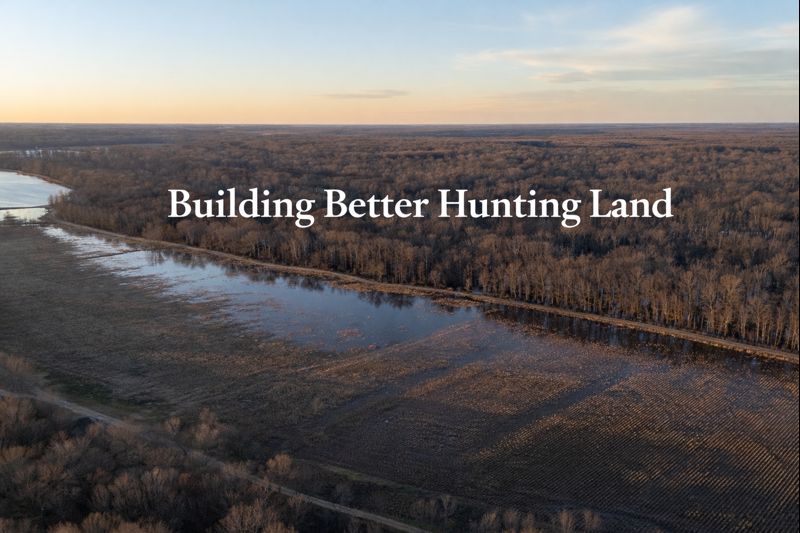
Recreational land is often misunderstood as “undeveloped.” In reality, the best hunting properties in are carefully developed just not in ways that show up on a building plan. Unlike traditional development, success in hunting land is measured by wildlife use, consistency, and longevity. The goal isn’t to change the land. It’s to shape how it functions.
Habitat first, always.
The most productive hunting properties share one common trait: intentional habitat management.
That usually means managing a mix of timber, openings, and edge. Bottomland hardwoods, native grasses, early successional cover, and managed food sources all play a role. Soil matters here not for foundations, but for what will actually grow, how it responds to disturbance, and how long improvements last.
Food plots fail more often because of poor soil understanding than poor seed choice. Knowing whether a plot can hold nutrients, handle traffic, or recover after flooding or drought determines whether it becomes a long term asset or an annual frustration.

Access determines pressure.
One of the fastest ways to ruin a good hunting property is poor access planning.
Road placement, entry points, and travel routes should be designed to minimize pressure and maximize predictability. The best tracts allow hunters to reach stands and blinds without crossing bedding areas or primary travel corridors.
In timber and delta ground especially, subtle elevation changes, old skid trails, and natural breaks often provide better access solutions than new construction. Smart access development is quiet, limited, and deliberate.
Pressure management is development.
Recreational land development isn’t about adding features. It’s about managing pressure.
Too many stands, too much equipment traffic, and overuse of certain areas can degrade a property faster than poor habitat. High quality hunting ground usually has fewer improvements, not more.
This is why smaller tracts with thoughtful layout often outperform larger tracts that are overdeveloped. Design decisions should consider prevailing winds, seasonal movement, and how animals respond to repeated human presence.

The long view.
The best recreational properties in are built slowly.
They improve over years through selective timber work, light disturbance, and restraint. They balance use with recovery. And they are developed with the understanding that wildlife responds to patterns, not projects.
Good hunting land isn’t created by doing more. It’s created by doing the right things, in the right places, for the right reasons.
That’s when land stops being recreational acreage and starts becoming a legacy property!